How Climate and Soil Shape Flavor in the World's Major Tobacco Regions
When discussing tobacco "mouthfeel," people tend to first think of brands, packaging, and blending lore. More fundamental — and more frequently borrowed by marketing rhetoric — is the producing region: Cuba, the Dominican Republic, Brazil, the United States, and Yunnan and Guizhou in China. Behind these names, what truly matters is how climate and soil shape field growth, and how curing then "freezes" the chemical profile into a style recognizable by the senses.
This article explains the terroir mechanisms of major tobacco regions from a raw-material and agro-ecological perspective, and provides a readable flavor reference table. Three boundary conditions first:
- **Regional flavor is a trend description, not an identity card.** Different fields within the same region, different years, varieties, stalk positions, and curing methods can produce vastly different results.
- **Cigar leaf follows different logic than cigarette flue-cured/Burley tobacco.** Both are covered below, but the intended use is noted to avoid the oversimplification of "one country, one taste."
- **Understanding terroir is not about picking "better-tasting" tobacco.** Every combustible tobacco product produces tar, carbon monoxide, multiple carcinogens, and irritant gases; popular science on producing regions does not change the health risk facts.
I. How Climate and Soil Shape Tobacco Leaf: A Universal Mechanism
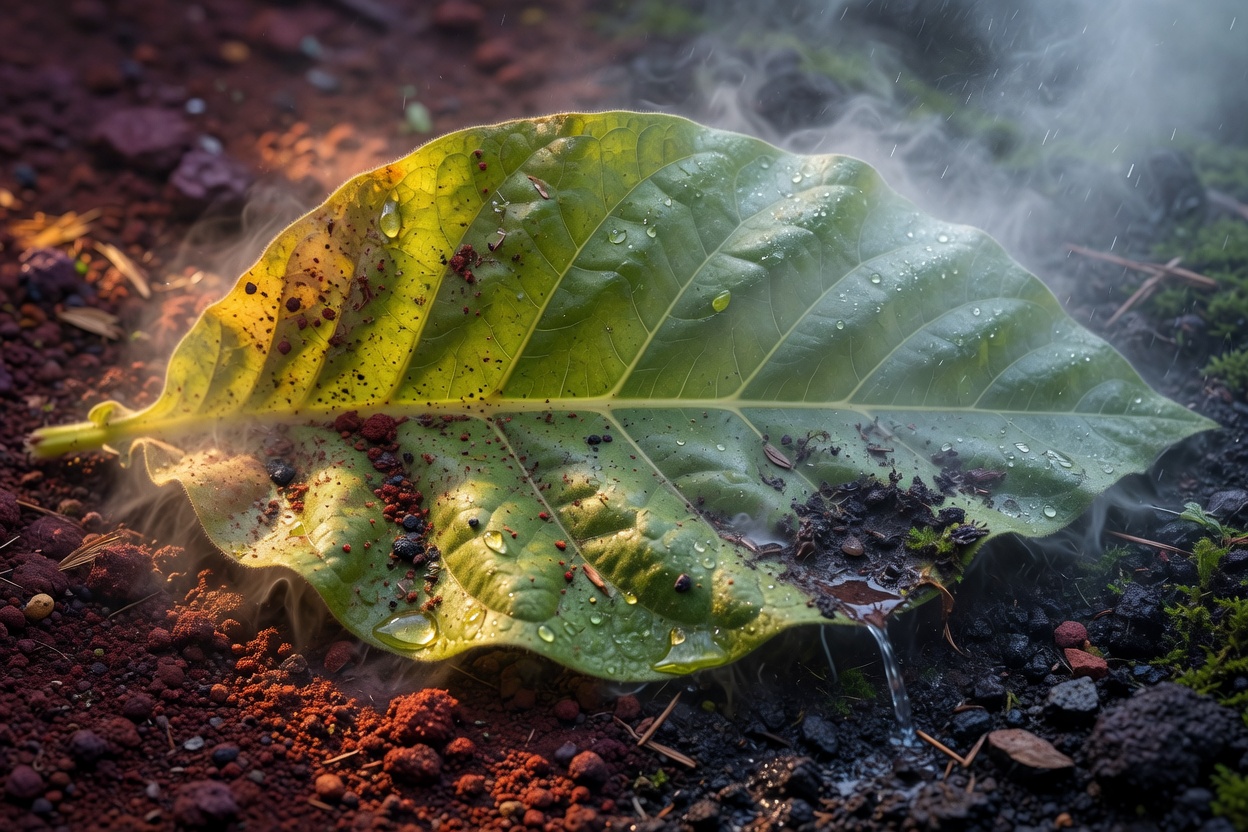
Think of tobacco leaf flavor as a chain:
Ecological inputs (light, temperature, water, soil, altitude) → Field physiology and secondary metabolism → Sugars, nicotine, nitrogen compounds, organic acids, polyphenols, and aroma precursors in the leaf → Fixation and re-transformation through curing (flue-curing/air-curing/sun-curing/fermentation) → Sensation (strength, sweetness, irritation, aroma type, aftertaste)
1. Temperature: The Balance Between Growth Rate and "Respiratory Consumption"
Suitable temperatures favor photosynthesis and dry matter accumulation; temperatures too high or too low both cause stress. In terms of style:
- **Moderate, stable temperatures with a moderate day-night temperature difference**: Often conducive to the coordinated accumulation of sugars and some aroma precursors (still dependent on variety and nitrogen fertilizer).
- **Sustained high temperature and humidity**: Rapid growth, large biomass, but if nitrogen supply is on the high side, easily pushes toward **high alkalinity, high nitrogen, increased irritation, and higher off-flavors**.
- **Large diurnal temperature range (especially on plateaus)**: Reduced nighttime respiratory consumption, favoring **carbohydrate retention**; strong UV environments are also associated with the accumulation of secondary metabolites like flavonoids — this is important background for understanding the "sweet aroma, rich aroma substances" narrative of plateau tobacco regions like Yunnan.
2. Water and Wet/Dry Seasons: The Key Knob for "Harsh" vs. "Smooth"
Water affects stomatal opening, nutrient uptake, and nitrogen metabolism:
- **Adequate and well-distributed water during the growing season**: Larger leaf area, potentially better body (thickness and oiliness), but excessive waterlogging damages roots and affects mineral uptake.
- **Moderate water stress** (within reversible limits): Often associated with **increased nicotine and enhanced certain secondary metabolites**; the "strong light + relative drought" logic of classic aromatic tobacco regions is partly built on this physiology.
- **Distinct wet and dry seasons**: The wet season ensures biomass, the dry season favors maturation and the curing window; the tropical maritime climate of Caribbean cigar regions typically features clear rainy and dry seasonal rhythms.
3. Light: Not Just "Sunbathing," It Also Affects Aroma Precursors
Strong light promotes photosynthesis and certain secondary metabolites; shade cultivation (e.g., for some cigar wrapper/binder leaf production) deliberately reduces light, altering leaf thickness and oil distribution to obtain thinner, more elastic, more evenly burning wrapper leaf. Therefore, the flavor narrative for "filler/binder" and "wrapper" from the same region can be completely different — this is an ecological division unique to the cigar system.
4. Soil: Nitrogen Is the "Master Switch" of Style; Texture and Drainage Determine Quantifiable Reproducibility
| Soil Factor | Typical Effect on Tobacco Leaf | How It Is Often Described in Terms of Flavor |
|---|---|---|
| High available nitrogen | Nicotine and total nitrogen tend to rise, sugar-nicotine ratio easily becomes unbalanced | High strength, increased irritation, reduced sweetness, higher risk of off-flavors |
| Moderate and balanced nitrogen | Sugars, alkaloids, and aroma substances more easily balanced | "Cleaner," clearer layering |
| Relatively sufficient potassium | Favorable for combustibility and some quality indicators | More even burn, higher potential for a cleaner aftertaste |
| High chlorine | Combustibility deteriorates | Extinguishing, off-flavors, quality degradation risk |
| Texture (sandy loam/loam) and drainage | Root vitality and nutrient rhythm | Heavy clay prone to waterlogging, overly sandy prone to nutrient depletion; classic quality fields often emphasize well-drained fine loamy soils |
| pH and organic matter | Nutrient availability and microbial environment | Excessive acidity or alkalinity both limit micronutrients; organic matter affects fertility retention and structure |
| Red soil/ferralitic accumulation | Iron and other element background, acidity common | Does not directly equal "a particular aroma," but affects nutrient management strategy |
| Volcanic/alluvial soils | Mineral and structural differences large | Often used to explain marketing language like "roundness/mineral feel" — scientifically, attribution should be cautious |
Key point: Soil does not directly "season" the leaf; it rewrites plant metabolic pathways through NPK and micronutrients, water, and root environment. Saying red soil "carries a peppery taste" is literary rhetoric, not a complete causal explanation.
5. Curing Is the "Amplifier" or "Rewriter" of Terroir
What the field produces are precursors and a skeleton; flue-curing, air-curing, sun-curing, and subsequent fermentation/aging substantially rewrite the sugar-nitrogen ratio and aroma substance profile. Leaf from the same ecology, subjected to flue-curing vs. air-curing/sun-curing, can taste like two different things. Therefore, when discussing regions below, the primary type and intended use are indicated where possible.
II. Cuba: Tropical Maritime Climate and the "Rich, Spicy, Structured" Cigar Narrative
1. Regional and Ecological Profile
Cuba's western Pinar del Río province, especially the Vuelta Abajo area, is one of the most referenced names in global cigar culture. Geographically located within the tropical tobacco suitability zone between the Tropics of Cancer and Capricorn, it features:
- **Tropical maritime climate**: Distinct wet and dry seasons;
- **Warm, high-humidity** growing environment;
- A narrative of **fine-grained, well-drained loamy soils** associated with rivers and topography (industry literature often summarizes reddish-brown fine loam characteristics; individual field variation is large).
2. How Climate and Soil Push Toward "Strong Structure"
With suitable varieties and traditional cultivation systems, Cuban cigar tobacco is often sensorially described as:
- **Full smoke structure, strong satisfaction**;
- **Spicy, peppery, woody, earthy/mineral-leaning** descriptions are common;
- Relatively **rich and powerful**, rather than merely "soft and sweet."
The mechanism can be understood as follows (still a trend, not a law):
- **Tropical light and temperature conditions** support vigorous growth and secondary metabolism;
- **A clear wet-dry rhythm** helps connect maturation rhythm with the traditional air-curing/fermentation system;
- **Long-term directional selection + traditional agronomy + fermentation techniques** solidify ecological potential into a style label — flavor is not just "the taste of the land," but also centuries of agronomic choices.
3. Pitfalls to Avoid When Reading Cuban Flavor
- **"Cuba = definitely the harshest"**: Stalk position, year, and degree of fermentation substantially alter intensity; wrapper and filler play different roles.
- **Political and supply narratives amplify mystique**: Scarcity and brand history influence subjective expectations, and expectations themselves alter sensory evaluation.
- **Cuban style cannot be generalized to all Caribbean regions**: Same tropics, but soil depth, microclimate, and variety systems differ, leading to divergent results.
III. The Dominican Republic: Cibao / Yaque Valley — The "Rich Yet Relatively Smooth" Path
1. Regional and Ecological Profile
High-quality Dominican cigar tobacco is highly concentrated in the northern Cibao Valley, where the Yaque Valley is often likened to the "Dominican Vuelta Abajo." The valley topography, flanked by mountain ranges, provides:
- **Tropical maritime climate**, with relatively high overall rainfall and humidity;
- Foothill areas often with **deeper, richer, better-drained soils**;
- Microclimatic factors such as afternoon breezes that can mitigate the stress of sustained high temperatures on the leaves.
In industry and metabolomics studies, Dominican cigar tobacco is often described as relatively mellow, with a smoky/herbal/smooth tendency (specific samples vary widely), and shows distinguishable patterns from regions such as Indonesia and China's Yunnan in sugar, amino acid, and volatile compound profiles.
2. Why It Is Often Said to Be "Milder Than Cuba"
Common explanatory combinations:
| Factor | Possible Contribution |
|---|---|
| Soil and water/fertilizer management | Deep foothill soils + irrigation systems make growth more stable and style more "full without being aggressive" |
| Variety and seed origin history | Many Cuban seed lines, after long-term acclimatization in the Dominican Republic, can behave quite differently from their origin |
| Industry and fermentation systems | Standardized fermentation/aging in the large-scale cigar industry creates predictable roundness |
| Blending culture | As a global cigar manufacturing hub, the Dominican Republic's leaf blending itself pursues balance |
In flavor language, Dominican leaf is often described as: rich, with creamy/nutty/woody and sweet-leaning tendencies; strength adjustable from medium to fairly strong, but "aggressiveness" narratives are typically weaker than some strong-style Cuban/Nicaraguan leaf. Keep in mind: this is a generalization from the market and tasting community, not a hard chemical threshold.
3. Practical Meaning of Soil Detail
For quality fields closer to the northern mountain foothills, a common description is deeper soil layers, more balanced fertility and drainage. For the root system, this means: more gradual nutrient release, lower waterlogging risk, more stable leaf body and usability — ultimately reflected in raw material attributes more suitable as high-proportion filler or balanced blend foundation.
IV. Brazil: Abundant Rainfall and Heat in a Major Production Landscape — Dual Role of Flue-Cured Tobacco Bulk and Cigar Raw Material
1. Regional Role
Brazil is one of the world's most important tobacco export and industrial raw material countries. Flue-cured Virginia-type tobacco volume and trade status are prominent, while southern and other regions also produce cigar-related leaf. When discussing Brazil, one must first ask: are you referring to cigarette industry flue-cured tobacco or cigar filler/specialty leaf?
2. Climate and Soil Logic
Brazil's main producing areas are mostly tropical–subtropical, with rainfall and heat conditions generally favorable for high biomass production:
- **Abundant precipitation and accumulated temperature** → suitable for large-scale, stable production;
- Wide range of soil types (from more fertile agricultural soils to acidic soils requiring careful management) → **style is not monolithic**;
- Advanced flue-curing facilities and agricultural techniques → chemical indicators (sugar, nicotine, color) highly controllable, serving industrial blending needs.
3. Flavor Tendencies (by Use)
| Use | Typical Flavor/Function Narrative |
|---|---|
| Flue-cured export leaf | Provides sweetness, roasted aroma, filling power, and cost structure; style can range from clean sweet to full, depending on grade and sub-region |
| Brazilian cigar-related leaf | Often described as relatively smooth, sweet, woody/nutty, strength can be medium; varies greatly by specific brand blend |
Mechanistically: rainfall/heat conditions + industrial breeding and curing make Brazil more readily a "stable, usable, scalable" flavor contributor, rather than a single legendary field narrative. For the reader, just remember one point — Brazil's key words are diversity and industrial controllability, not one fixed aroma type.
V. The United States: Flue-Cured Belt and Burley Belt — Climate Regimes Corresponding to Tobacco Types
US tobacco geography is almost a textbook on "type–climate" correspondence.
1. Southeastern Flue-Cured Belt (Virginia, North Carolina, etc.)
- **Climate**: Temperate–subtropical transition, warm growing season with a clear maturation and curing seasonal window.
- **Soil**: Sandy loam to loam agricultural soil systems, paired with long-standing flue-cured agronomy.
- **Type**: **Flue-cured** tobacco dominant.
- **Flavor Function**: Relatively high reducing sugars; sweetness and roasted aroma are classic skeletons for industrial blending; aroma quality, body, and usability vary with grade and sub-region.
Climatic "flue-curability" — whether the weather during maturation favors harvest and intensive barn curing — together with the soil's nitrogen supply rhythm, determines whether the sugar-nicotine balance can be brought into an acceptable flue-cured chemical profile.
2. Kentucky–Tennessee Burley Belt
- **Climate**: More continental climate characteristics, suitable for **air-curing** window.
- **Type**: **Burley tobacco**.
- **Chemistry and Flavor**: **Low sugar, high nitrogen, high nicotine potential**; sensorially, descriptions of strength, dryness, nutty/cocoa/roasted notes are common; industrially often used with casing.
- **Key point here is not "all American tobacco tastes the same," but rather: different climate belts selected different curing systems and variety systems, and flavor divergence begins in the field.**
3. Other Types — Brief Mention
The US historically also produced Maryland air-cured and other types; the Connecticut River Valley is famous for wrapper leaf, where shade cultivation and alluvial soil narratives represent another terroir logic of "thin leaf, finesse, even burn." One point suffices: within a single country, regional flavor differences can be greater than differences between countries.
VI. China's Yunnan: Plateau Monsoon, Red Soil, and the "Clean Sweet Aroma" Yunnan Tobacco Narrative
1. Ecological Foundation
Yunnan is one of China's most important flue-cured tobacco producing regions, with multiple style sub-regions formed around Yuxi, Dali, Kunming's periphery, Qujing, etc. In recent years, cigar leaf cultivation has also expanded in Lincang, Pu'er, Yuxi, and other areas. Typical ecological labels include:
- **Subtropical plateau/mountain monsoon climate**;
- **Large altitude range (many quality tobacco areas at moderate to high elevations)**;
- **Relatively good sunshine conditions in many western areas**;
- **Significant day-night temperature differences**;
- **Red soil, yellow soil, and other acidic soil backgrounds** common;
- Compared to tropical lowlands like the Dominican Republic, research materials often present a contrasting pattern of: **less extreme precipitation, lower humidity and average temperatures, higher altitude, larger diurnal temperature range**.
2. How the Mechanism Lands on "Yunnan Style"
Common industry and tasting community descriptions of high-quality Yunnan flue-cured tobacco include: good aroma quality, clean sweet or honey-like sweetness, relatively fine smoke, "clean" when off-flavor is controlled. Possible ecological contributions include:
- **Large diurnal temperature range** → favors carbohydrate accumulation, providing a precondition for post-curing sweetness and aroma base;
- **Plateau sunlight and UV** → consistent with reports of more active secondary metabolism (e.g., flavonoid-related pathways);
- **Moderate coolness, not persistently muggy like tropical lowlands** → growth rhythm is more "composed," reducing the coarseness from merely piling on biomass;
- **Precise water and fertilizer management on red soil background** → nitrogen control becomes the lifeline of style: if nitrogen is excessive, Yunnan's "clean sweet aroma" narrative easily collapses.
In cigar leaf studies, Yunnan samples also show metabolic profiles distinct from Indonesia and the Dominican Republic, e.g., carbohydrate indicators such as total sugar, reducing sugar, and starch can be relatively higher (still depends on sample and year). This suggests that plateau ecology does have an observable effect on the "sugar–aroma precursor" axis, but post-fermentation cigar sensory character is substantially rewritten by processing.
3. Yunnan Within Is Not Monolithic Either
| Sub-region Impression (Generalized) | Ecology/Style Hint |
|---|---|
| Central Yunnan (e.g., Yuxi area) | Traditional core flue-cured narrative, emphasizing aroma quality and usability |
| Eastern Yunnan/Qujing, etc. | Production volume and style both valued; clear sub-regional differences |
| Western Yunnan/Lincang, Pu'er, etc. | Active cigar leaf development; humid-hot and altitude combination different from central Yunnan basin areas |
When reading "Yunnan flavor," it is best to go down to the city/county and field scale, rather than stopping at the province name.
VII. China's Guizhou: Mountainous Coolness, Yellow Soil, and Karst Background — Guizhou Tobacco's "Substance and Mountain Character"
1. Ecological Foundation
Guizhou, together with Yunnan, forms a major wing of Southwest China's tobacco region, but overall is more:
- **Karst mountainous terrain, transitional from the Yunnan-Guizhou Plateau eastward**;
- **Relatively more overcast/rainy days, sunshine conditions in some areas weaker than western Yunnan**;
- **Yellow soil, limestone soil, and other diverse soils**, with both acidic and calcareous backgrounds present;
- **Cool, humid** mountain climate characteristics more pronounced.
2. Possible Shaping of Style
High-quality Guizhou flue-cured tobacco, in industrial evaluation, is commonly oriented toward:
- **Relatively substantial smoke, with concentration**;
- A combination description of **burnt-sweet/roasted aroma and local mountain field character**;
- Compared with some Yunnan tobacco, sometimes summarized as **"heavier, thicker," with a slightly weaker "clean-transparent" narrative** — but this is highly dependent on specific producing area and grade, and cannot be absolutized.
Mechanistic clues:
- **Cool-humid** conditions prolong or alter maturation rhythm, affecting sugar-nicotine and aroma precursor balance;
- **Sunlight and humidity combinations** differ from Yunnan's dry-hot valleys or central basins, shifting secondary metabolic profiles;
- **Interlayered limestone and yellow soil** make pH and calcium/magnesium backgrounds complex, water and nutrient management difficult; successful fields often have a more "characterful" style, while failed fields have more pronounced off-flavor and combustibility issues.
3. Yunnan–Guizhou Comparison: A Table to Remember the Difference Logic
| Dimension | Yunnan (Generalized) | Guizhou (Generalized) |
|---|---|---|
| Altitude and light/temperature | Many high-altitude advantage fields, large diurnal range, good sunshine in some areas | Mountain cool-humid, some areas with relatively little sunshine |
| Soil | Red soil and other acidic soils dominant | Yellow soil, karst-related soils more prominent |
| Style keywords (flue-cured) | Clean sweet, aromatic, fine, clean | Substantial, rich, mountain character/local sense |
| Management key | Control nitrogen to preserve aroma, leverage temperature difference and maturity | Drainage, sunlight and soil acidity management, stable maturation and curing |
VIII. Horizontal Summary Table: Climate · Soil · Flavor Tendency · Use
| Region | Climate Highlights | Soil Highlights | Typical Flavor/Function Tendency (Generalized) | Primary Use Narrative |
|---|---|---|---|---|
| Cuba Vuelta Abajo | Tropical maritime, distinct wet-dry seasons, warm-humid | Fine loamy, strong drainage narrative | Rich, spicy, strong structure, woody/peppery | Top-tier cigar core producing area narrative |
| Dominican Republic Cibao/Yaque | Tropical maritime, humid, foothill breezes | Deep foothill soils, red soil background common | Rich, relatively mild and smooth, sweet/nutty/woody | Global cigar manufacturing and leaf sourcing hub |
| Brazil | Tropical–subtropical, abundant rain and heat | Diverse types, highly agriculturalized | Flue-cured: sweet-roast aroma and industrial usability; Cigar leaf: sweet-smooth variable | Global flue-cured supply core + cigar raw material |
| US Flue-Cured Belt | Warm growing season, clear curing season | Sandy loam to loam agricultural soils | Sweetness, roasted aroma skeleton | Flue-cured industrial leaf |
| US Burley Belt | Continental seasons suitable for air-curing | Agricultural soils + air-curing tradition | Low sugar, high strength, nutty/cocoa/roasted | Key ingredient for blended cigarettes |
| China Yunnan | Plateau monsoon, large diurnal range | Red/yellow soil, acidic background | Clean sweet, aromatic, fine (flue-cured); cigar leaf metabolic profile distinct | China's flue-cured core + rising cigar leaf |
| China Guizhou | Mountain cool-humid | Yellow soil/limestone background complex | Substantial, rich, local mountain character | Important Chinese flue-cured producing region |
IX. Translating the Mechanism Into "What You Might Roughly Sense"
The following table is only for building intuition, cannot replace actual chemical testing, and does not constitute consumption advice.
| If you read... | It often corresponds in terroir to... | But immediately add this qualifier |
|---|---|---|
| Harsher, more spicy, stronger structure | Higher nicotine/nitrogen potential, tropical strong light and heat, specific variety and stalk position | Fermentation and blending can significantly "round it off" |
| Sweeter, more roasted | Flue-cured path + light/temperature/diurnal range favoring sugar accumulation + moderate nitrogen | Upper stalk leaves and high-nitrogen fields can destroy sweetness |
| Softer, smoother, creamy nutty | Deep stable-moisture soils, industrial fermentation, specific blending culture | Smooth ≠ low harm |
| Thicker, more mountain field character | Cool-humid mountains, complex soils, local varieties and curing | Substance sometimes also comes with off-flavor risk |
| Wrapper leaf fine-burning | Shade cultivation, specific alluvial/fine soils, thin-leaf directed cultivation | Wrapper aroma contribution pathway differs from filler |
X. Five Common Misconceptions
Misconception 1: "The region determines everything."
Variety, rootstock/seed source, fertilization, harvest maturity, curing, and fermentation — each link can overturn regional stereotypes. Terroir is probability and boundaries, not a script.
Misconception 2: "One country has only one taste."
The US has a flue-cured belt and a burley belt; China has multiple style systems including Yunnan, Guizhou, Hunan, and Henan; Brazil is equally diverse internally. A country name is a customs label, not a sensory label.
Misconception 3: "Red soil = spicy, black soil = sweet."
Color is a rough indicator of soil mineral and organic matter status; it cannot be mapped to a fixed aroma type. What actually matters is nitrogen supply rhythm, drainage, pH, and potassium-chlorine balance.
Misconception 4: "Cigar region stories apply directly to cigarettes."
Cigars emphasize stalk position division, long-term fermentation, and whole-cigar structure; cigarettes emphasize leaf blending, reconstituted sheet, flavoring and casing, and industrial stability. Ecological mechanisms are shared, product logic differs.
Misconception 5: "Tobacco from region X is healthier."
There is no "healthy producing region." The list of harmful substances produced by combustion is a matter of combustion chemistry; producing regions only change style and some precursor profiles and do not eliminate addictiveness or disease risk.
XI. Health Position and Conclusion
From Cuba's tropical valleys to the red and yellow soil terraces of the Yunnan-Guizhou Plateau, climate and soil do leave fingerprints on tobacco's sugar-nicotine balance, nitrogen metabolism, and aroma precursors; curing and blending then inscribe these fingerprints into "styles" that the market can name. Understanding this helps see through the over-marketing of "mystical soil determines everything" and helps establish clear coordinates in raw material popular science.
But the end of the coordinates should not be "how to pick a better-tasting producing region," but rather a clearer reality:
- **Nicotine dependence** and regional flavor can coexist;
- **Tar and harmful combustion products** do not disappear because it "comes from a famous region";
- For those already with rhinitis, periodontal issues, or underlying cardiovascular or lung diseases, the risks of continued inhalation of burning tobacco smoke are clear.
If your interest comes from culture, history, or agricultural geography, regional terroir is a worthwhile lesson to study seriously; if your goal is harm reduction, the more effective path is to stop using combustible tobacco products and to seek professional cessation support when needed — not to search for "cleaner fields" on a map.
Suggested Reading for Verification and Further Exploration
- Cigar producing region comparisons: climate and soil overviews of the Cibao Valley, Vuelta Abajo, and other areas (industry geography and tasting literature)
- Tobacco types and curing: chemical and sensory differences of flue-cured, Burley, and air-cured/sun-cured tobaccos (agricultural and industrial standard texts)
- Southwest China tobacco regions: ecological and style zoning data for Yunnan and Guizhou flue-cured tobacco
- Metabolomics perspective: studies on differences in sugars, amino acids, and volatile compounds between cigar tobacco from different countries (e.g., comparative work on Yunnan vs. Dominican Republic)
(Specific values vary with year and sampling; please verify against original literature and local agricultural statistics when citing.)